
Rethinking Excellence: Why True Academic Rigor Includes Neurodiverse Learners
In my conversations with parents—particularly here in Madrid—I often hear a familiar question wrapped in concern: “Can a school really be both academically rigorous and inclusive?” It’s as if these two ideas sit on opposite ends of a spectrum, and families must choose one or the other.
Let me say this clearly: this is a false perception. There should be no need to choose.
At Maxwell, we are proof that excellence and inclusion don’t just co-exist; they enhance one another. When a school sets high standards and provides the right teaching and support, children thrive. Not just some children. All children.
The Old Model of education is just that, ‘Old’. Academic excellence has been, and in many schools still is measured through narrow metrics: test scores, rigid conformity, and a one-size-fits-all approach that often benefits only a certain kind of learner. The “ideal” student is quiet, quick, and a ‘no problems’ learner.
But our world no longer works like that. The world our children are stepping into is dynamic, uncertain, and deeply interconnected. It values adaptability, creativity, collaboration, emotional intelligence and self-knowledge. These are qualities that are not developed through rote learning or top-down discipline, but grown through deeper, more human approaches to education.
And here is the irony. The future belongs to flexible thinkers, and this is precisely where neurodiverse learners can lead.
When given the tools, support, and respect they need, these students develop strengths that go far beyond the academic box. They often become excellent problem-solvers, empathetic collaborators, and agile thinkers. This is because they’ve had to be. The challenge is that most traditional school environments do not give them the space to flourish.
At Maxwell School we do things differently.
We’ve intentionally designed a school that is both structured and adaptable. Our class sizes are small by design—typically fewer than 16 students—because we believe relationships matter. Our British curriculum is woven together with the International Middle Years Curriculum, allowing us to scaffold learning carefully while strengthening communication, literacy, and conceptual understanding.
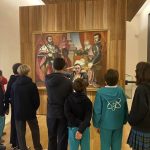
We use the city of Madrid as an extension of our classroom. We visit galleries, hike in the Guadarrama mountains, and design maths challenges in Retiro Park. Our students don’t just study life; they live it.
We are proud of our neurocognitive approach. Through the Arrowsmith Program, students strengthen cognitive functions like Symbol Recognition and Symbol Relations—key building blocks for reading, comprehension, reasoning, and memory. This is not an alternative learning strategy. It is a central part of how we build genuine capacity in our learners.
However, let me be clear: academic rigor is not about pressure or perfection. It is about stretching every learner, gently, toward their full potential.
It means giving a student who once struggled with reading the cognitive tools to decode fluently and the confidence to perform in front of their peers. It means supporting a bilingual learner to access high-level literature and write clearly in two languages. It means making room for creativity, independence, and thinking time—not just worksheets and grades.
The idea that you must choose between a school with “rigor” and one with “support” is outdated and misleading. If you are a parent who has been told you must choose between “support” and “high standards,” I encourage you to challenge that assumption. We see children every day who are intellectually capable, curious, and driven but who have not yet found the right environment in which to thrive.
And if you are an educator or policymaker, I would urge you to look beyond labels and standardisation. The most effective schools of the future will not be the ones that avoid complexity. They will be the ones that embrace it.
At Maxwell School we lead with humanity. We are not trying to be the biggest school in Madrid, but we are focused on being the right school for the families who believe, as we do, that inclusion and excellence can walk hand in hand.
Academic rigor does not mean exclusion. It means purposeful expectations. It means knowing your students, supporting them wisely, and letting them surprise you.
And they will